I already knew the house
I had shown this property to other clients before. I knew the house and thought highly of it. When Lindsay and I brought these buyers through, they loved it too.
But liking a house and being ready to make an offer are two different things.
The first chance disappeared
On September 30, the listing agent told me another offer was already in hand. There wasn't enough time for my clients to act responsibly on that short notice.
I explained that they loved the property and asked the agent to contact me if the deal didn't go ahead.
That first deal later fell apart. The agent remembered our conversation and let me know the home was available again. We had a second chance.
Going back before deciding
The buyers went through the house again. They also returned so a family member could see it in person before they committed.
Those visits gave them more time with the property. They then decided to make an offer.
Another offer arrived. We looked beyond price.
Our offer became competitive when another offer was received. I didn't treat the next step as simply telling the buyers to pay more.
I asked the listing agent what mattered to the sellers besides price, including closing flexibility, conditions and timing. The sellers were flexible on closing, and the agent indicated that a shorter conditional period would strengthen the offer.
Checking the timeline with the mortgage broker
Before revising the offer, I spoke with the buyers' mortgage broker. The broker was confident that a five-business-day financing period was workable for these buyers.
That conversation mattered. A shorter deadline had to fit the work that still needed to happen, not just look attractive on paper.
The buyers revised their offer, retaining a financing condition, and the sellers accepted it.
I can't say that one term made the difference. What I can say is that we asked questions, checked the financing timeline with the right person and helped the buyers make an informed revision. Five business days was the plan for this purchase—not a rule for someone else's offer.
Inspection day: understanding a 1936 home
After acceptance, the next steps moved quickly: the deposit, lawyer, mortgage process and professional home inspection.
Mark O'Brien of O'Brien Home Inspections inspected the home. The inspection identified older components, including a fuse panel, some knob-and-tube wiring observed in the basement, an aging water heater and cast-iron plumbing, along with other maintenance and repair items.
The question wasn't whether a house built in 1936 could produce a report with nothing to discuss. It was what the findings meant for these buyers.
I helped them organize the conversation around three questions:
- What needs action now?
- What should we budget to replace?
- What can be monitored as part of owning an older home, based on the inspector's advice?
That did not mean dismissing findings because the house was old. It meant understanding them, following up where needed and deciding whether the work and costs fit the buyers' plans.
For the broader questions to bring to a showing, see my guide to buying an older house in London.
Older components meant planning, not promises
The electrical panel
The inspection identified an older fuse panel and recommended replacement as soon as practical.
For the buyers, that meant treating the panel as a real expense to prepare for rather than assuming that because it was functioning that day, it would continue indefinitely.
My conversation with them was practical: the panel had been working, but nobody could predict how long it would continue to do so. They needed to understand the inspector’s recommendation and be financially prepared for replacement, with electrical safety and the work itself left to the inspector and a qualified electrician.
The water heater
The water heater was clearly old, and the inspection identified it as an older unit. The buyers understood that it needed attention and replaced it shortly after purchasing the home.
That was a foreseeable ownership expense they could plan for. In this purchase, it wasn't a reason on its own to walk away.
One insurer's concern wasn't the end of the conversation
One insurer objected to the home's cast-iron plumbing stack. That raised an insurance question during the buyers' due diligence.
The buyers explored another insurer, which was willing to insure this property.
The lesson is specific: the first insurer's response did not determine the outcome for this house. Different insurers can have different requirements. It does not mean every house with cast-iron plumbing will be accepted.
Considering another insurer is not a substitute for disclosing the home's condition or understanding the coverage and any required work. Those questions belong with the insurance professional.
They understood the house well enough to choose it
The buyers didn't proceed because the home had no issues. They proceeded after working through what they were buying, what needed attention, what might cost money later, and whether financing and insurance were workable.
They decided the home still made sense for them.
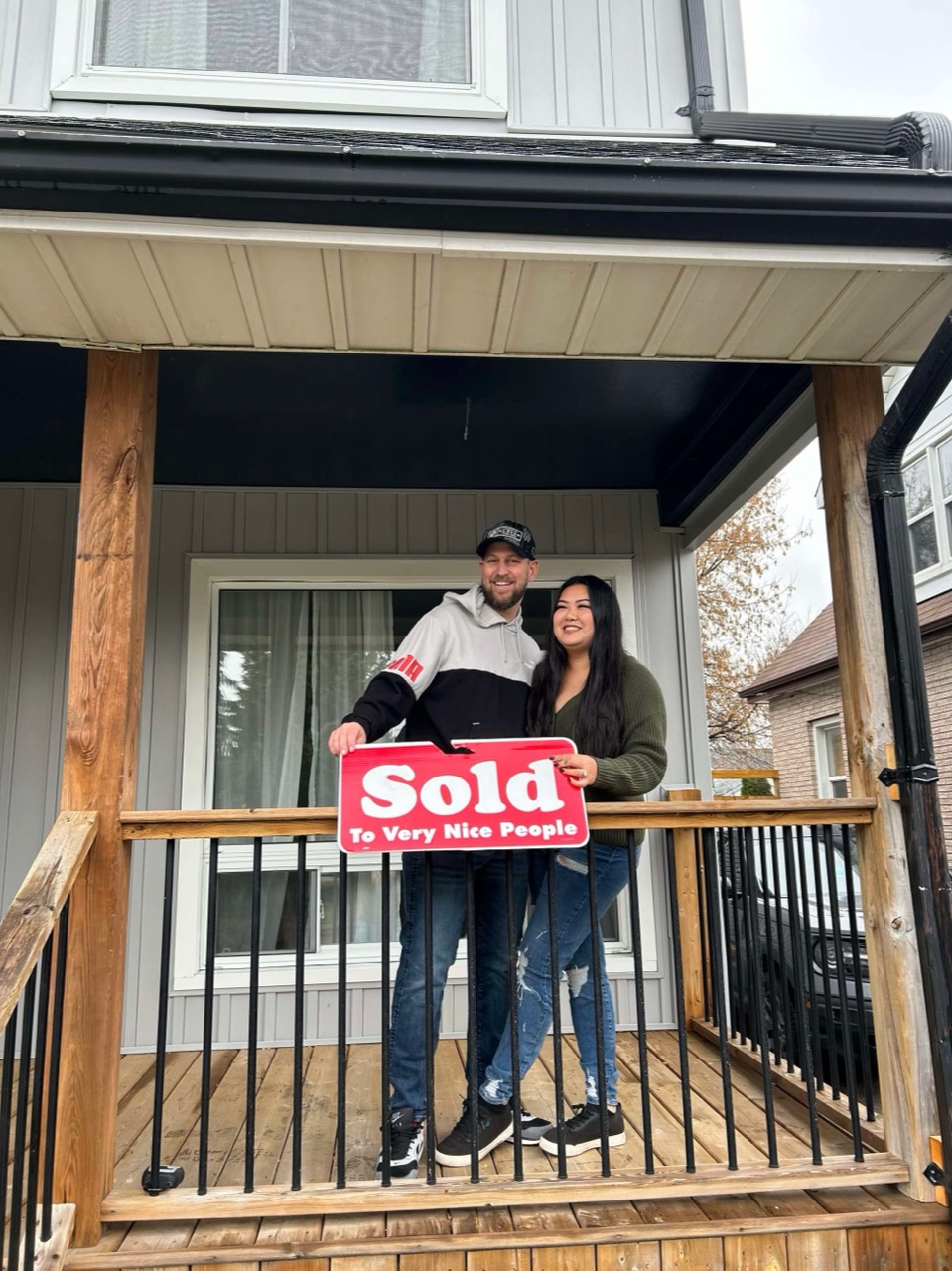
Lindsay and I continued coordinating the real-estate side of the purchase: the deposit, mortgage process, communication with the lawyer, final walkthrough and closing logistics. The buyers completed their purchase.
Buying an older home isn't about pretending nothing is wrong. It's about understanding the questions well enough to decide whether the property is right for you.
What another first-time buyer can take from this
- Don't let a short deadline make the decision for you. These buyers weren't ready for the first opportunity. We kept the conversation open without rushing them.
- Check what a stronger offer would actually require. We asked about the sellers' priorities and spoke with the mortgage broker before revising the financing period.
- Turn inspection findings into questions and a budget. An older component is something to understand, not automatically ignore or panic about.
- Resolve property-specific questions with the right people. The inspection, financing and insurance conversations each had a role in this purchase.
If you're starting from the beginning, my first-time home buyer guide explains the wider process. My East London guide provides local context for comparing areas and properties.
Every older home is different. This was one purchase, and the right decision depended on this property, these buyers and the advice of the professionals involved.
What the buyer later wrote
The buyer later described both the first-home guidance and continued help after the sale in a public Google review:
“Zach was very detailed and determined to not only help us find the perfect 1st home but to get us the best deal… After the sale, he continues to share his knowledge of home repair and helps us out whenever we need a hand.”
Looking at your first older home in East London?
Tell me what you're considering and which questions are still unanswered. We can talk through the property, the next steps and who needs to be involved before you commit.
Talk to Zach about buying Call Zach: 647-877-3792